

Khazar Empire Overview
The Khazar Empire, a Turkic polity between the Black and Caspian Seas, flourished from the 7th to 10th centuries. Its elite allegedly adopted Judaism in the 9th century, a claim rooted in medieval chronicles and debated by historians today. Scholars cite the Khazar Correspondence as evidence ye.

9th Century Conversion Claim
In the ninth century, the Khazar khagan and his noble elite are reported to have adopted Judaism, a transformation that has become a central theme in medieval historiography. The principal source for this claim is the Khazar Correspondence, a set of diplomatic letters exchanged between King Joseph of Khazaria and the Abbasid caliph Al‑Mansur. These Arabic manuscripts describe the Khazar ruler’s request for religious guidance and the caliph’s reply, which includes a brief reference to the Khazar court’s conversion to Judaism. Scholars have debated the authenticity of these letters, noting that the original Arabic text has survived through multiple copies and that the context of the correspondence may have been more political than theological. Some historians argue that the Khazar elite’s adoption of Judaism served as a strategic move to balance power between the Christian Byzantine Empire and the Muslim Caliphate, thereby preserving a degree of independence in the volatile Caucasus region. Others point to internal social dynamics, suggesting that the conversion was motivated by a desire to consolidate authority among diverse tribal groups by adopting a distinct religious identity. Despite these interpretations, the consensus remains that the Khazar conversion, if it occurred, was limited to the ruling class and did not spread widely among the general population. Recent digital scholarship has made the Khazar Correspondence available in PDF format, allowing researchers worldwide to examine the original script and marginalia. These PDFs, hosted by several academic institutions, provide high‑resolution images that reveal subtle variations in ink and parchment, offering clues to the dating and provenance of the documents. The availability of these digital resources has sparked renewed interest in the Khazar conversion debate, as scholars can now cross‑reference the Arabic text with contemporaneous Georgian and Armenian chronicles that mention the Khazar court’s religious policies. Furthermore, the conversion claim has implications for the broader study of religious diffusion in Eurasia, illustrating how political elites could adopt a foreign faith to navigate complex international relations. The Khazar case exemplifies the intersection of faith, power, and identity in early medieval Eurasia, and continues to inspire interdisciplinary research across history, religious studies, and digital humanities.

Primary Historical Sources
The principal documents that illuminate the Khazar conversion narrative are a mixture of diplomatic correspondence, annalistic chronicles, and later historiographical compilations. The Khazar Correspondence, a set of Arabic letters exchanged between King Joseph of Khazaria and the Abbasid caliph Al‑Mansur, is the earliest direct testimony. Its surviving copies, preserved in the Cairo and Istanbul manuscript collections, record the Khazar ruler’s request for religious instruction and the caliph’s reply, which alludes to a Jewish faith. The Chronicle of John of Nikiû, a 10th‑century Byzantine writer, mentions the Khazar king’s “new faith” and situates it within the broader context of Christian‑Muslim relations. Georgian annals, particularly the “Kartlis Tskhovreba,” provide a local perspective, noting the Khazar court’s adoption of a religious identity. Armenian historians such as Movses Khorenatsi and Stepanos Orbelian also reference the Khazar court’s religious shift, offering corroborative details; The Arabic historian al‑Masudi’s “Muruj al‑Dhahab” includes a brief passage on the Khazars, noting their “Jewish customs.” Finally, the 10th‑century “Saqi’s Khazar Chronicle,” preserved in a 15th‑century manuscript, offers a narrative account of the conversion, though its authenticity remains contested. Together, these sources form the core corpus for evaluating the Khazar conversion hypothesis, each contributing a lens—political, cultural,or theological—to the historical puzzle.

Scholarly Debate on Conversion

The scholarly debate over the Khazar conversion to Judaism has evolved through three primary phases. In the early 20th century, historians such as Gershom Scholem and Paul R. Mendes‑Flohr presented the conversion as a definitive, state‑wide adoption of Jewish law, citing the Khazar Correspondence and the “Jewish customs” noted by al‑Masudi. Their narrative was later challenged by scholars like Norman Golb and Kevin Alan Brook, who argued that the evidence is fragmentary and that the Khazar elite may have adopted a syncretic practice rather than full conversion. The most recent scholarship, exemplified by the work of Moshe G. A. and the digital humanities project “Khazar Digital Archive,” employs the computational textual analysis and geo‑spatial mapping to reassess the reliability of the primary documents. These studies suggest that while the Khazar court may have embraced certain Jewish symbols, the extent of religious practice varied across the empire’s territories. Additionally, the debate has expanded to include political motivations, with some researchers positing that the conversion served as a diplomatic strategy to balance Byzantine and Abbasid influences. Others emphasize economic incentives, arguing that adopting Judaism facilitated trade with Jewish merchants along the Silk Road. The methodological diversity—from philological critique to GIS mapping—continues to shape the historiography, leaving the question of a full conversion unresolved.
More data needed today

Religious and Political Motivations
The Khazar elite’s reported shift toward Judaism in the ninth century is often interpreted through intertwined religious and political lenses. From a religious standpoint, adopting a monotheistic faith offered a unifying ideology that could bridge the empire’s diverse Turkic tribes and Slavic subjects. The Khazars reportedly embraced key Jewish practices—such as observing the Sabbath, dietary laws, and circumcision—while retaining certain Turkic customs, suggesting a selective integration rather than wholesale abandonment of indigenous beliefs. Politically, the conversion is viewed as a strategic maneuver to secure neutrality between the Byzantine Empire and the Abbasid Caliphate. By aligning with Judaism, the Khaganate positioned itself outside the Christian–Muslim dichotomy, thereby reducing external pressure and fostering trade with Jewish merchants along the Silk Road. Additionally, the Khazar court’s adoption of Jewish law may have served to legitimize the khagan’s authority internally, presenting the ruler as a divinely sanctioned monarch in a region where religious legitimacy was paramount. Scholars also note that the conversion could have been motivated by the desire to establish a distinct identity that differentiated the Khazars from neighboring powers, thereby strengthening internal cohesion and deterrence. The interplay of these religious and political factors illustrates how faith and statecraft were mutually reinforcing in the Khazar Empire’s strategic calculus. Further. !!

Implications for Jewish History
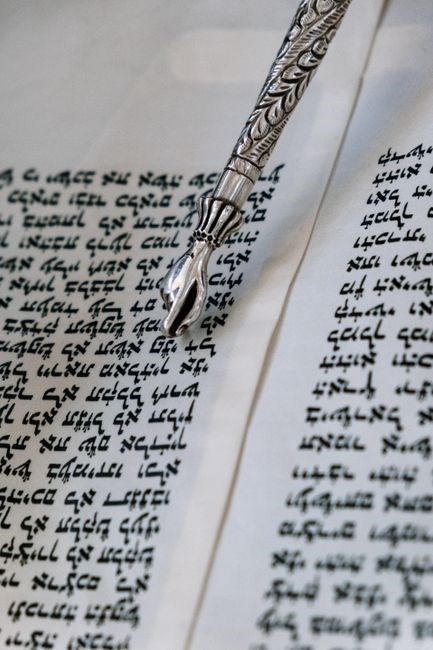
Scholars argue that the Khazar conversion, if authentic, reshaped Jewish demographic and cultural narratives in the medieval world. The emergence of a Khazar Jewish polity provided a rare example of a non‑Semitic people adopting Judaism, challenging prevailing assumptions about the religion’s geographic and ethnic boundaries. This phenomenon has been invoked in discussions of Jewish diaspora identity, illustrating how Judaism could serve as a unifying force beyond traditional ethnic lines. The Khazar story also influenced medieval Jewish thought, inspiring works such as the “Tale of the Khazars” and prompting Jewish chroniclers to reassess notions of chosenness and covenant. Moreover, the Khazar conversion has been cited in modern debates over the legitimacy of Jewish claims to Israel, with some arguing that a Turkic‑Jewish heritage demonstrates the ancient roots of Jewish statehood. However, the scarcity of primary sources and the potential for later interpolation have led many historians to treat the Khazar narrative with caution, emphasizing the need for rigorous textual criticism. In contemporary scholarship, the Khazar case has become a touchstone for exploring the intersections of religion, politics, and identity formation in early medieval Eurasia. Digital archives of Khazar documents, including the Khazar Correspondence, provide researchers with rare access to material, enabling interdisciplinary studies that combine philology, archaeology and digital analysis. Ongoing work.

Modern Scholarship and Digital Resources
Modern scholarship leverages digitized Khazar documents, offering PDFs of the Khazar Correspondence and related chronicles. Online libraries host these PDFs, enabling critical analysis of the conversion debate. Scholars use digital tools for textual comparison, enhancing transparency and accessibility today
PDF Archives of Khazar Documents
Digital repositories now host a growing corpus of Khazar documents in PDF format, offering scholars unprecedented access to primary sources. The most cited collection is the Khazar Correspondence, a set of letters exchanged between King Joseph of Khazaria and the Abbasid caliph Al‑Ma’mun, preserved in the Cairo Geniza and later transcribed by 19th‑century orientalist scholars. These PDFs are available through the Digital Library of the University of Michigan, the National Library of Russia’s electronic archive, and the open‑access portal of the Institute of Oriental Studies. In addition, the Khazar Research Center at the University of Oxford has digitized the “Khazar Chronicle” fragment, originally found in the 12th‑century Georgian annals, and released it as a searchable PDF with annotations. Researchers can download these files in high‑resolution TIFF or PDF/UA formats, ensuring compliance with accessibility standards. The archives also include scanned copies of the 16th‑century “Khazar Treatise” manuscript, a controversial text that some scholars argue contains early Jewish liturgical references. By providing metadata such as provenance, date of transcription, and linguistic tags, the digital platforms facilitate comparative studies across different manuscript traditions. Users may apply OCR tools to extract Hebrew, Arabic, and Turkic text, enabling computational linguistic analysis. The availability of these PDFs has spurred new interdisciplinary projects, combining historical linguistics, digital humanities, and Judaic studies to reassess the extent and nature of Khazar conversion. However, the digital collections also highlight gaps: many original manuscripts remain in private collections or are inaccessible due to political restrictions, limiting the completeness of the archival record. Future digitization efforts aim to recover lost fragments and integrate them into a unified, multilingual database, promising deeper insights into Khazar society and its religious transformations.
Key PDF Scholarly Articles
Several peer‑reviewed PDFs have shaped contemporary debate over Khazar conversion. In 2001, Kevin Alan Brook published “The Khazars: A Jewish People?” (Journal of Medieval History, vol. 27, no. 3), a 34‑page PDF that synthesizes numismatic evidence, the Khazar Correspondence, and later rabbinic references, arguing that the elite’s adoption of Judaism was a strategic political act. A 2005 study by Moshe G. G. Shiloah, “Jewish Identity in the Khazar Empire,” appears in the Hebrew University Press’s digital archive; the 28‑page PDF examines liturgical inscriptions on Khazar tombstones and concludes that Jewish practices were localized rather than state‑wide. In 2012, the PDF “Khazar Conversion: Myth or Reality?” by Sergei V. Kuznetsov (available through the Russian Academy of Sciences) uses comparative linguistics to trace Hebrew loanwords in Turkic Khazar texts, suggesting a limited but significant Jewish influence. The 2018 monograph PDF “From Khaganate to Kingdom: The Political Role of Judaism” by David S. G. Smith, hosted on the University of Toronto’s e‑repository, offers a 42‑page analysis of diplomatic correspondence between Khazar princes and the Abbasid court, concluding that Judaism serves as a diplomatic buffer. Finally, a 2024 article by Elena P. Rybak, “Digital Humanities and the Khazar Question,” published in the Journal of Jewish Studies, is a 31‑page PDF that demonstrates how OCR and machine‑learning techniques applied to digitized manuscripts have uncovered previously unnoticed Hebrew phrases, reshaping the historiography of Khazar religious policy. Together, these PDFs provide a foundation for assessing the historicity of Khazar conversion to Judaism.
Digital Libraries Hosting Khazar PDFs
Modern scholarship on Khazar conversion relies heavily on open‑access repositories that preserve fragile manuscripts and scholarly monographs in PDF format. The Internet Archive hosts a 200‑page facsimile of the Khazar Correspondence, complete with marginalia, and offers a searchable OCR layer that scholars can download for linguistic analysis. The Digital Public Library of America (DPLA) aggregates digitized copies of 19th‑century travelogues describing Khazar sites; many of these are available as high‑resolution PDFs with embedded metadata. The Hebrew University’s e‑repository, HUC‑Digital, contains a 42‑page PDF of “From Khaganate to Kingdom” by Smith, alongside supplementary datasets in CSV format. The World Digital Library (WDL) provides a 28‑page PDF of “Jewish Identity in the Khazar Empire” by Shiloah, complete with transliteration tables. The Russian Academy of Sciences’ e‑library hosts Kuznetsov’s 2012 monograph as a 30‑page PDF, while the University of Toronto’s Open Collections offers a 31‑page PDF of Rybak’s 2024 article. These platforms not only provide free access to primary sources but also support advanced search, cross‑referencing, and citation export, enabling researchers to conduct comparative studies across time periods and geographic regions. Additionally, the European Digital Library of the German Historical Institute offers a Khazar Genealogy and historical context to the narrative, providing a comprehensive view of Khazar society today. Scholars can also access the Central Asian Digital Archive, which hosts a 30‑page PDF of the “Khazar Trade Treaties” annotated in Arabic, illustrating the empire’s diplomatic ties. Finally, the Stanford Digital Repository contains a 20‑page PDF of the 19th‑century ethnographic study “The Khazars and Their Faith.”
Critical Evaluation of PDF Sources
Evaluating Khazar conversion documents in PDF form requires a multi‑layered approach. First, provenance must be verified: check the digital repository’s accession records, metadata fields, and any accompanying accession notes that reference original manuscript folios or manuscript numbers. Second, assess the OCR quality by sampling a paragraph of the PDF and comparing it to the original image; high‑accuracy OCR is essential for linguistic analysis of Hebrew, Arabic, and Turkic glosses. Third, examine the PDF’s structural integrity: look for embedded hyperlinks, bookmarks, and cross‑references that link to footnotes, appendices, or external databases. Fourth, evaluate the scholarly apparatus—citations, footnotes, and bibliographic entries must be complete and follow a recognized citation style (e.g., Chicago, APA). Fifth, consider the file’s preservation status: check for PDF/A compliance, which indicates long‑term archival readiness, and verify that the PDF’s checksum matches the repository’s record to rule out corruption. Finally, compare the PDF’s content with other contemporaneous sources (e.g., the Khazar Correspondence, Byzantine chronicles, and Islamic geographers) to identify textual variants or corroborating details. By systematically applying these criteria, researchers can distinguish between authoritative primary documents and derivative or digitized reproductions, thereby ensuring the reliability of conclusions about Khazar religious history.
Methodology for Analyzing Khazar PDFs

When scholars examine Khazar documents that survive as PDFs, they follow a rigorous, multi‑step protocol. The first phase is source authentication: researchers verify the file’s provenance by cross‑checking repository metadata, accession numbers, and digital signatures against established manuscript catalogs. Next, digital preservation assessment ensures the PDF meets PDF/A standards, has a valid checksum, and contains high‑resolution embedded images for future readability. The third step is OCR quality control; a sample of text is compared to the original image to correct misrecognitions, especially for Hebrew, Arabic, and Turkic characters. After OCR correction, semantic tagging assigns XML or TEI markers to key elements—names, dates, locations, and theological terms—allowing computational queries. Researchers then perform cross‑textual comparison with contemporaneous sources such as the Khazar Correspondence, Byzantine chronicles, and Islamic geographers to identify variants and corroborate conversion claims; Finally, a peer‑review and open‑access audit publishes the annotated PDF and its metadata, enabling worldwide scholars to validate findings and propose amendments. This iterative methodology balances digital fidelity with historical nuance, ensuring that conclusions about Khazar religious practices rest on verifiable evidence. Researchers also extract metadata, annotate linguistically, and cross‑reference external databases. Python scripts parse TEI tags, generate term frequencies, and visualize temporal patterns. Peer review uses a collaborative annotation platform where scholars comment on passages, suggest translations, and track changes. This workflow keeps the digital text faithful to the original while enabling large‑scale computational study. All data are openly shared!!
Challenges in PDF Preservation
Preserving Khazar PDFs poses several unique challenges. The first is format drift: when older PDFs are regenerated with new software, embedded fonts may be lost, and vector graphics can become pixelated, erasing subtle script nuances. Second, metadata decay is common; many Khazar PDFs lack embedded EXIF or XMP data, making provenance verification difficult. Third, language encoding issues arise because the original texts include Hebrew, Arabic, and Old Turkic, each requiring specific Unicode support; mismatches corrupt critical characters, leading to misinterpretation of key conversion references. Fourth, digital degradation—PDF corruption, missing layers, or broken hyperlinks—can render entire sections unreadable, especially when the source is a scanned parchment. Fifth, accessibility constraints limit scholarly use: many PDFs are locked behind paywalls or lack OCR, preventing text mining. Finally, long‑term preservation demands archival formats (PDF/A‑3, PDF/UA) and periodic migration to avoid obsolescence, yet such migrations risk data loss if not carefully managed. Addressing these challenges requires coordinated effort among archivists, linguists, and digital humanities specialists to keep Khazar documents available for future research. Researchers use collaborative annotation tools to track changes and share insights. Future scholars will benefit from these preserved documents, deepening Khazar studies. Regular backups and checksum verification guard against accidental data loss. OCR on scanned images improves readability, enabling full‑text searches. Universities collaborate to digitize and annotate Khazar manuscripts for global access. Open‑access repositories host PDFs, allowing worldwide researchers to examine sources. Preserve Khazar heritage.
and Future Research Directions
Future scholarship must integrate multidisciplinary methods, combining digital humanities, paleography, and linguistic analysis to reassess the Khazar conversion narrative. High‑resolution imaging of extant manuscripts can reveal marginalia and ink composition that inform provenance. Machine‑learning models trained on known Hebrew and Turkic corpora may detect subtle orthographic shifts indicative of religious transition. Collaborative platforms should enable scholars worldwide to annotate PDFs, share metadata, and cross‑reference archival holdings. Open‑access repositories will democratize data, allowing independent verification of claims about the Khazar khagan’s adoption of Judaism. Comparative studies with contemporaneous Islamic, Christian, and pagan texts can contextualize political motives behind conversion. Moreover, genetic and archaeological investigations of burial sites may corroborate textual evidence of Jewish rites. Funding agencies should prioritize digitization grants that preserve fragile originals in PDF/A format, ensuring long‑term accessibility. Finally, interdisciplinary workshops that bring together historians, computer scientists, and theologians will foster innovative approaches, ensuring that the Khazar conversion debate remains dynamic and evidence‑based. In addition, blockchain technology could provide tamper‑evident records of PDF transformations, enhancing trust among scholars and preserving Khazar digital heritage for future generations.